
Why This Economy Is So Hard to Read
How do you either protect yourself from or take advantage of it?
We’re in a recession, or we’re about to be in a recession or…something. Interest rates are high and are only adding some friction to inflation, but not choking it off. The improbable threat of a U.S. debt default looms. But unemployment runs quite low, long after the savings people ostensibly built up during the COVID subsidy era have been drained. We’ve had a couple of high-profile bank failures, but few seem overly concerned about a 2008-9 style bank crash. Why is this economy so hard to read, and how do you either protect yourself from or take advantage of it?
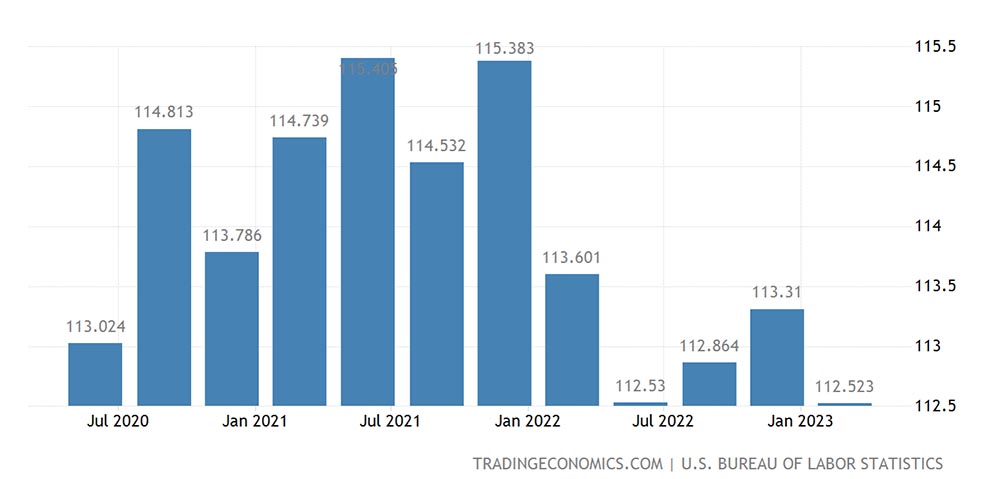
1. Wages continue to climb but labor productivity has slowed.
This chart from Labor Economics showed that labor productivity spiked during the early phases of COVID but then has fallen off since. Is this because of remote/hybrid work? What made remote/hybrid work early but not late? I don’t think that we know. But I do think I know that wages have de-coupled from productivity and you’re seeing companies live with losing customers rather than pay wages or offer working conditions they don’t think make sense.
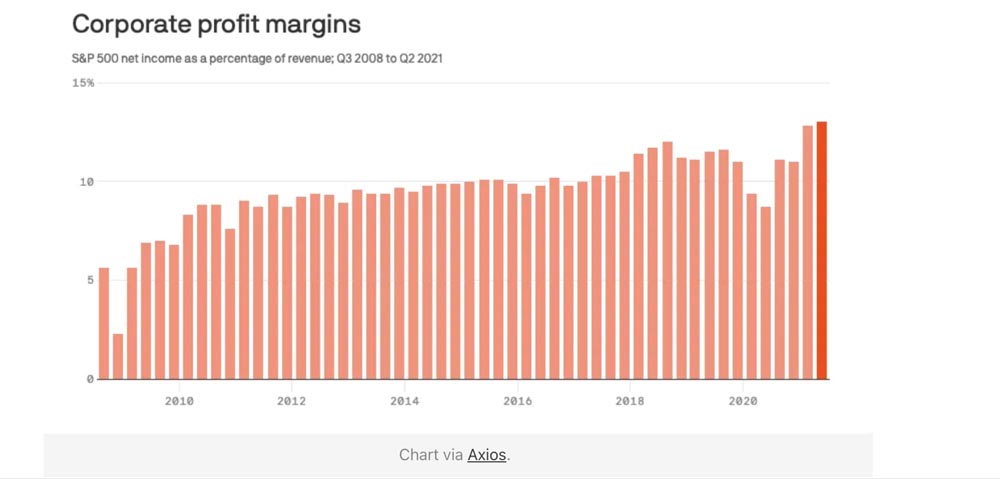
2. Growth Is Down but Profits Are Up
Companies have learned that the path to maximum profitability is not always growth. Now that the cost of labor (wages) and capital (interest rates) have increased over the last 2 years, companies have chosen to restrict supply and push up margins, resulting in higher profits.
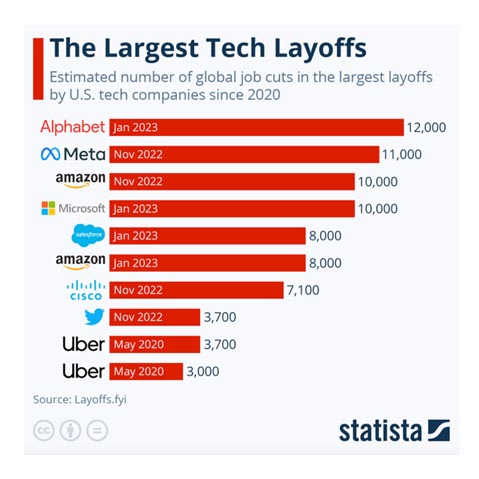
3. Big Tech realized they overhired, but that freed up software engineers for other companies
For all of the layoffs by Big Tech, there are still half a million *advertised* jobs in software in the U.S.
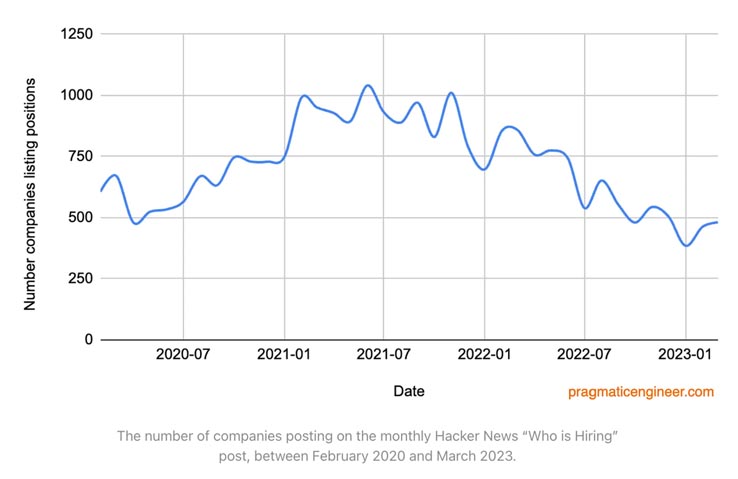
Big Tech laid off less than 100,000 people; there are still 5 jobs out there for every one of them. They’ll be OK.
So, things are kind of “meh”…why do we feel much more on the brink?
Why we feel so ill at ease even though the economic story is much closer to mediocre than calamitous is that this economic period is different from anything most of us have seen. We have a supply-driven recession, instead of the demand-driven ones we have seen since 1981-2. We last saw a supply-driven recession, along with stagflation in the 1970’s, when Arab oil embargoes were made worse by Nixon Administration price controls. I’m old enough to remember the gas lines, and my dad bought a diesel car because in a pinch you could use heating oil as fuel. But the problem is that by 1978, when I received my Atari 2600 for Christmas, I was eight years old. I remember Space Invaders—not how executives ran companies.
The problem is my dad has long since retired as have all the other executives of that time—few people even recognize this recession for what it is and fewer still know how to make sense of it and operate in it.
What are the lessons we can learn to make the best of this situation?
- Scale economies are more meaningful now. Because labor supply is constrained (I believe, for the long term), unit economics have become critical. Double down on efficiency efforts.
- Talent retention is more potent than talent acquisition. Do what it takes to hang on to the talent you have because there is no guarantee that it can be replaced.
- There is a high value on flexibility. The economic environment is likely to remain volatile for two years. There is value to the agility to react to environmental changes and unexpected opportunities.
- The way out of stagflation is innovation. Taking risks and making investments to improve operations or create new revenue sources is the path to a winning strategy.
Volatility and disruption are uncomfortable, but they create opportunities. By correctly diagnosing this current economic environment, you are empowered to make better decisions on how to deploy capital and other resources to maximize the positive impact to your business’s resiliency and its overall value.
Questions?
Brady Ware offers a comprehensive range of advisory services, including strategic advisory, financial analysis, tax compliance, litigation support, employee stock ownership plans, succession planning, mergers and acquisitions, quality of earnings analysis, tax structuring, and business valuations. Our team of experienced professionals provides tailored solutions to help clients achieve their financial goals, minimize risks, and optimize their business performance. Brady Ware’s advisory services focus on developing solutions and creating pathways to success for businesses facing complex challenges, leveraging their deep understanding of business operations, transactional situations, and personal and ownership legacies.