
The Power of Nonprofit Partnerships
Why Nonprofits Should Consider a Partner and the Benefits
In today’s complex world, nonprofits face ever-growing challenges that often outpace their individual capacities. To solve pressing social issues and create lasting change, collaboration is key. This is where the power of partnerships enters the picture. By forming strategic alliances, nonprofits can pool resources, leverage expertise, expand reach, and ultimately amplify their impact far beyond what they could achieve alone.
Here’s how nonprofit partnerships enhance the mission-driven sector:
Expanded Reach
When nonprofits join forces, they can magnify successful programs and reach broader audiences. This collaborative approach can take proven models of progress and expand them to impact even more lives.
Filling Resource Gaps
Partnerships allow nonprofits to share financial resources, human capital, infrastructure, and technological capabilities, minimizing redundancies and ensuring resources are optimally used.
Increased Innovation
Collaboration exposes nonprofits to new knowledge, skill sets, and problem-solving approaches. This cross-pollination of ideas helps spur innovation in addressing society’s ills.
In a world defined by complex problems, forming nonprofit partnerships isn’t just beneficial, it’s becoming essential to achieving the change we all want to see.
Amplified Voice
Joint advocacy efforts by multiple nonprofits create a unified, powerful voice. This amplifies messaging to lawmakers and other influential entities, boosting chances of influencing positive change.
Partnerships are not limited to fellow nonprofits. Collaborations with corporations, government entities, and educational institutions further enhance capabilities. Successful partnerships are those with clarity of purpose, shared values, and mutually beneficial structures. Here are some important considerations:
- Shared Values: Partnerships work best when missions and values are genuinely aligned.
- Clear Goals & Expectations: Establishing measurable objectives and outlining roles upfront keeps things on track.
- Open Communication: Promotes trust and allows for addressing issues or adjusting strategy as needed.
The Takeaway
In today’s complex societal landscape, the transformative power of collaboration cannot be overstated. The nonprofit sector can unlock new possibilities for making a real and lasting difference in the world by fostering well-aligned, effective partnerships.
Brady Ware Nonprofit Advisors want to help you fulfill your mission with financial health and compliance services and a network of nonprofit consultants who specialize in strategic decision-making.
Download:
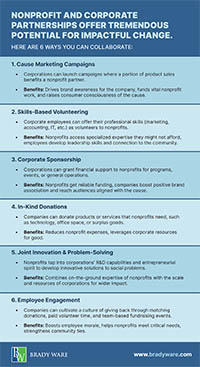
6 Ways You Can Collaborate in Nonprofit and Corporate Partnerships
Questions?
Dylan manages a variety of accounting and auditing engagements for the firm’s Dayton, Ohio, clients in numerous industries, including construction, manufacturing, and technology. He has an extensive background in auditing nonprofit organizations, including those that are recipients of federal funding, as well as experience in auditing employee benefit plans.