
Quality of Earnings Reports Explained
Decoding the Financial Story: Understanding Quality of Earnings Reports
In the world of business transactions, from mergers and acquisitions to fundraising, understanding a company’s true financial picture is paramount. But how do you look beyond the surface of standard financial statements? A Quality of Earnings (QoE) report is a detailed financial analysis that provides a clearer, more accurate view of a company’s profitability and cash flow. It goes beyond reported earnings to assess the sustainability and reliability of those earnings. This analysis helps stakeholders make informed decisions by uncovering potential red flags and highlighting key financial drivers.
Frequently Asked Questions
What is the main purpose of a Quality of Earnings report?
A Quality of Earnings report provides a more accurate and reliable understanding of a company’s financial health by assessing the sustainability of its reported earnings.
What are some common uses of a Quality of Earnings report in business?
Quality of Earnings reports are commonly used in mergers and acquisitions, fundraising, and strategic planning to aid in informed decision-making.
What should I look for when choosing a Quality of Earnings advisor?
You should look for an advisor with extensive experience, relevant industry expertise, and a strong reputation for delivering thorough reports.
What is a Quality of Earnings Report?
A Quality of Earnings report is a comprehensive analysis of a company’s financial data, designed to assess the sustainability and reliability of its reported earnings. It delves into the underlying drivers of a company’s financial performance, identifying any potential accounting irregularities, unsustainable trends, or hidden risks. The primary purpose of a QoE report is to provide stakeholders with a more accurate and reliable understanding of a company’s financial health, enabling them to make informed decisions in various business transactions.
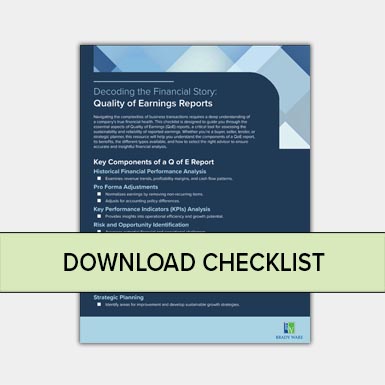
A typical QoE report includes several key components. It begins with an analysis of historical financial performance, examining revenue trends, profitability margins, and cash flow patterns. Next, it includes pro forma adjustments, which normalize earnings by removing non-recurring items and adjusting for accounting policy differences. The report also analyzes key performance indicators (KPIs), providing insights into the company’s operational efficiency and growth potential. Finally, it identifies risks and opportunities, assessing potential financial and operational challenges, as well as market opportunities.
Benefits of a Quality of Earnings Report for Businesses
In M&A, a Quality of Earnings report helps buyers assess the true value of a target company and identify potential risks. For fundraising, it provides investors with a deeper understanding of a company’s financial health, increasing their confidence in the investment. For strategic planning, a QoE report can help businesses identify areas for improvement and develop strategies for sustainable growth.
” A Quality of Earnings report goes beyond standard financial statements to reveal the true, sustainable earnings of a business by analyzing underlying financial drivers and identifying potential risks.”
Different Types of QoE Reports
There are different types of QoE reports, each tailored to the specific needs of the stakeholders involved. A buy-side QoE report is conducted by a potential buyer to assess the financial health of a target company. A sell-side QoE report is conducted by a seller to present a clear and accurate picture of their company’s financial performance to potential buyers. A lender QoE report is conducted by a lender to assess the creditworthiness of a borrower.
How to Choose a QoE Advisor
Choosing the right QoE advisor is crucial for ensuring the accuracy and reliability of the report. Look for an advisor with extensive experience in conducting QoE assessments. Seek an advisor with relevant industry expertise, as they will have a deeper understanding of the specific challenges and opportunities in your sector. Consider the advisor’s reputation, seeking recommendations and testimonials from previous clients. A reputable advisor will deliver a thorough and insightful report, providing valuable insights for your business decisions.
Disclaimer: This article provides general information and should not be considered professional financial or tax advice. Please consult with a qualified CPA or financial advisor for guidance specific to your individual business needs.
Questions?
Mike Kiene brings over two decades of experience to middle-market clients, specializing in quality of earnings, risk management, and due diligence across diverse industries. He works within a wide range of industries, including construction, manufacturing and distribution, and dealerships.