
Key Strategies for Navigating Rapid Growth
Rapid Growth: Key Considerations for Business Owners
Rapid growth is often the desire of many business owners. It also can be viewed as a “be careful what you wish for.” Certainly, fast-growing companies create an exciting time for business owners and the ability to take your service or product to market and get significant attention is rewarding.
However, it also presents significant challenges. As a company expands, it faces new demands, increased complexity, and potential pitfalls even without the undertone of it being fast-growing. Add in the speed of which it is growing, and it’s even more critical that business owners have a strategic approach.
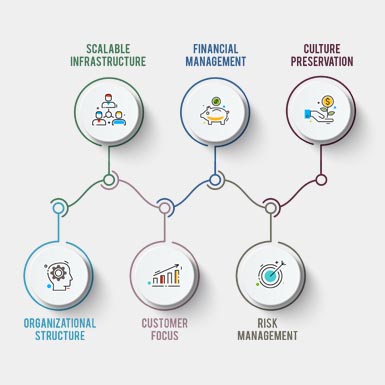
Here are six areas to consider and develop strategies that best fit your business.
1. Scalable Infrastructure
One of the most critical aspects of managing rapid growth is ensuring that the company’s infrastructure can keep pace. Consider:
- Technology: Invest in robust technology solutions that can handle increased data volumes, remote workforces, and complex operations while also ensuring data security and backup processes.
- Human Resources: Hire qualified personnel goes without saying. Beyond that, develop a scalable hiring process that welcomes and onboards new talent efficiently and comprehensively with the right training, company culture integration and roles and responsibilities.
- Facilities: Evaluate whether existing facilities can accommodate expansion or if new locations are necessary. Depending on your type of business, this can mean the need for real estate, equipment or specialty needs and consultants. This also has impacts on your financial stability through cash flow and debt strategies just for starters so including your accountants early is a smart move.
2. Financial Management
As a company grows, so does its financial needs. Effective financial management is essential to sustain growth and avoid cash flow issues regardless of how quickly a company is growing. When it’s growing quickly, this becomes even more heightened.
- Cash Flow Forecasting: Develop accurate cash flow projections to anticipate future needs and potential shortfalls.
- Financial Controls: Implement strong financial controls to prevent fraud, errors, and inefficiencies.
- Investment Strategy: Consider strategic investments in technology, marketing, or talent acquisition to fuel continued growth.
- Expansion or Upgrades: Give careful consideration for expansion or key equipment or process upgrades and carefully examine with your financial team how that impacts your cash flow, debt, investment and other liquidity issues or even private equity involvement.
3. Organizational Structure
A well-defined organizational structure is crucial for maintaining efficiency and accountability as a company expands.
- Delegation: Empower employees by delegating tasks and responsibilities through a carefully developed hierarchy and decision-making process.
- Communication: Foster open and transparent communication channels to ensure everyone is aligned with company goals.
- Leadership Development: Invest in leadership development programs to prepare employees for future roles.
“Rapid growth is a double-edged sword. While it’s exciting, it also brings significant challenges. By carefully considering these six areas, businesses can position themselves for long-term success.”
4. Customer Focus
Even during rapid growth, it’s essential to maintain a strong focus on customer satisfaction.
- Customer Service: Provide exceptional customer service to retain existing customers and attract new ones. Is this a part of your company culture? How are you getting employees to invest in it and be your client champions at every level?
- Feedback: Actively seek customer feedback to identify areas for improvement.
- Customer Loyalty or Experience Programs: Implement loyalty programs to reward repeat customers and encourage referrals. As important, work with marketing and a cross-section of your employees to develop client experience programs that communicate, deliver client service improvements and actions throughout the year.
5. Risk Management
Rapid growth can introduce new risks to a business and effective risk management is essential to mitigate potential threats.
- Risk Assessment: Identify and assess potential risks, such as market fluctuations, competition, and regulatory changes. Develop a SWOT analysis (strengths, weaknesses, opportunities, threats) for present day and future state. For M&A and other related transactions involving private equity or debt, a Quality of Earnings report can also be required. Even without requirements, it is a significant examination of your business and reveals areas to improve that will only bolster your value.
- Contingency Planning: Develop contingency plans to address potential challenges and minimize their impact. Include staffing and leadership.
- Insurance: Ensure adequate insurance coverage to protect the business from unforeseen events.
6. Culture Preservation
As a company grows, it’s important to preserve its unique culture and values.
- Company Values: Reinforce company values through training, communication, and recognition programs.
- Employee Engagement: Foster a positive and engaging work environment to maintain employee morale and productivity.
- Onboarding: Implement a thorough onboarding process to help new employees understand the company’s culture and values.
By carefully considering these factors, business owners can effectively navigate the challenges and opportunities presented by rapid growth. By investing in infrastructure, financial management, organizational structure, customer focus, risk management, and culture preservation, they can position their companies for long-term success.
Questions?
Brady Ware offers a comprehensive range of advisory services, including strategic advisory, financial analysis, tax compliance, litigation support, employee stock ownership plans, succession planning, mergers and acquisitions, quality of earnings analysis, tax structuring, and business valuations. Our team of experienced professionals provides tailored solutions to help clients achieve their financial goals, minimize risks, and optimize their business performance. Brady Ware’s advisory services focus on developing solutions and creating pathways to success for businesses facing complex challenges, leveraging their deep understanding of business operations, transactional situations, and personal and ownership legacies.