
Unlocking Nonprofit Growth with the Eisenhower Matrix – DOWNLOAD
The Power of the Important/Urgent Matrix for Prioritization and Strategic Decision-Making
Are you feeling overwhelmed by a never-ending to-do list? Looking for a way to not only decide what needs your attention but also how to prioritize effectively? This simple yet powerful four-quadrant framework is more than just a decision-making tool; it’s a prioritization matrix that can significantly improve your focus and strategic actions. By categorizing tasks based on urgency and importance, you can gain clarity, reduce anxiety, and position yourself and your team for better outcomes. Let’s dive into how this works.
Understanding the Four Quadrants
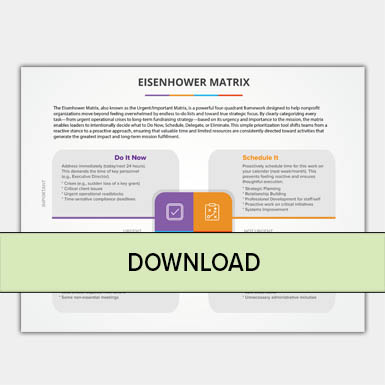
Imagine a square divided into four sections. Each quadrant represents a different combination of importance and urgency:
Quadrant 1: Important and Urgent
These are the tasks that demand your immediate attention. They are critical to achieving your goals and have pressing deadlines. Think of crises, urgent problems, or time-sensitive projects.
Quadrant 2: Important and Not Urgent
This quadrant contains tasks that are crucial for long-term success but don’t require immediate action. This is where strategic planning, relationship building, professional development, and proactive work can reside.
Quadrant 3: Not Important but Urgent
These tasks often feel pressing but don’t significantly contribute to your core objectives. They might include interruptions, some meetings, or less critical requests from others.
Quadrant 4: Not Important and Not Urgent
These are the tasks that are neither crucial nor time-sensitive. They are often time-wasters or activities that have lost their relevance. A good question to consider asking is, “Why are these activities here and do I need to keep them on my to do list?”
Diving Deeper into the “Do It Now” Quadrant
When a task lands in the important and urgent quadrant, the action is clear: Do it now. These are the fires or critical items you need to address immediately. For leaders, this might involve addressing critical client issues or resolving an urgent operational roadblock. These tasks often fall directly onto the shoulders of key personnel, like the executive director, requiring immediate action within the day or week due to their significance.
“This simple yet powerful four-quadrant framework is more than just a decision-making tool; it’s a prioritization matrix that can significantly improve your focus and strategic actions.”
Strategic Planning in the “Schedule It” Quadrant
Tasks that are important but not urgent require a different approach: Schedule them. These are the activities that contribute to your long-term vision. By proactively scheduling them on your calendar, whether it’s next week or later in the month, you ensure they don’t get pushed aside by more immediate demands. This proactive planning helps alleviate the feeling of being overwhelmed or constantly reactive and allows for thoughtful execution of critical initiatives.
Empower Your Team in the “Delegate It” Quadrant
The “not important but urgent” quadrant presents an opportunity for delegation. Ask yourself, “Who else can handle this effectively?” This not only frees up your time for higher-priority tasks but also provides valuable growth opportunities for your team members. The concept of “delegate to elevate” is something to consider here. Instead of just offloading tasks, consider delegating with intention, aligning tasks with an individual’s professional development goals. This approach not only elevates the person receiving the task but also strengthens the organization by fostering a culture of growth and recognizing the talent within the team. Reflect on past experiences where you might have felt like a task was delegated simply to clear someone’s desk, without any consideration for your development. As a leader, initiating conversations about your team’s professional growth and identifying delegation opportunities that align with their goals is a responsibility.
Reclaiming Your Time with the “Eliminate It” Quadrant
Finally, tasks that are neither important nor urgent can be carefully considered for elimination. Do they truly add any value? Can they be deleted or simply put on the back burner indefinitely? While some of these tasks might eventually shift in priority, many are simply time wasters that detract from more meaningful work. Recognizing and eliminating these non-essential activities is vital for maximizing productivity and focusing on what truly matters.
A Practical Example: From Overwhelm to Focus
Consider a leadership team facing a daunting list of 17 initiatives for the next quarter. The sheer volume can create a sense of overwhelm and anxiety. By applying this four-quadrant framework, the team can categorize each initiative based on its urgency and importance. In one real-world scenario, this exercise revealed that only four items fell into the important and urgent category, while seven or eight were important but not urgent. This visual separation immediately brought clarity and reduced anxiety. The team could now focus on the immediate priorities while strategically scheduling the important but not urgent tasks and considering delegation or elimination for the rest. This simple exercise transformed a feeling of being overwhelmed into a sense of intentionality and manageable action, demonstrating the power of this prioritization tool in achieving focus and strategic alignment.
Brady Ware Nonprofit Advisors wants to help you fulfill your mission with financial health and compliance services and a network of nonprofit consultants who specialize in strategic decision-making.

Joel Kessel
Executive Coach
Kessel Strategies
About the Author
Joel Kessel is an executive coach and strategic advisor who helps nonprofits increase their impact through peer group executive sessions and one-one coaching, board and team retreats, and leadership development. Joel has spent his entire 25+ year career deeply connected to the nonprofit community. He has worked inside and advocated on behalf of nationally recognized organizations including the National Multiple Sclerosis Society, Ronald McDonald House Charities, AirLifeLine, and the National Runaway Safeline, as well as numerous Ohio-based organizations including the Charitable Healthcare Network, Habitat for Humanity, Van Wert Performing Arts Foundation, and the Center for Disability Empowerment.
For more information, visit Kessel Strategies.