
The Transition to Electric Vehicle (EV) Maintenance
How Auto Repair Shops Can Successfully Prepare for the Shift to Electric Vehicle Service and Repairs
The shift to electric vehicle (EV) maintenance requires auto repair shops to transition from traditional internal combustion engine (ICE) service models to specialized high-voltage workflows. Preparing for this shift involves investing in insulated safety equipment, certifying technicians in battery diagnostics, and updating facility infrastructure with Level 2 and Level 3 charging stations. While EV adoption reduces the frequency of oil changes, it introduces new revenue opportunities in thermal management, specialized tire services, and battery health monitoring.
Key Takeaways
What are the most important safety tools needed for servicing electric vehicles?
Shops must invest in CAT III or IV rated multimeters and 1,000V insulated hand tools to safely manage the high-voltage systems found in modern electric drivetrains.
How does electric vehicle maintenance differ from traditional gas car service?
While EVs eliminate oil changes and exhaust repairs, they require specialized attention to battery thermal management, high-voltage cable integrity, and unique tire wear patterns caused by increased vehicle weight.
Will auto repair shops lose money as customers switch to electric vehicles?
Revenue is not disappearing but shifting toward high-margin services like battery health diagnostics, specialized braking system lubrication, and advanced cabin climate control maintenance.
Securing the Bay with High-Voltage Safety Equipment
As a shop owner or manager, your first priority in the transition is safety. Unlike the 12V systems of the past, modern EVs operate on high-voltage architectures that can exceed 800V. This shift necessitates an immediate investment in specialized high-voltage safety equipment and insulated tooling for the service bay.
You aren’t just buying new wrenches; you are building a safety perimeter. This includes CAT III or CAT IV rated multimeters, insulated hand tools rated for 1,000V, and personal protective equipment (PPE) such as high-voltage rubber gloves and arc flash face shields. Furthermore, your bay layout must change to include “danger” zones with physical barriers to ensure that only certified technicians are near vehicles during high-voltage disconnect procedures.
Developing a Technician Training Roadmap
The heart of your operation—your technicians—must undergo a significant mental and technical shift. You cannot simply “tinker” with an electric drivetrain. To stay competitive, you should develop a comprehensive technician training roadmap that prioritizes battery diagnostics and thermal management systems.
Technicians need to understand how the battery “talks” to the motor and how the complex cooling loops keep those components within optimal temperature ranges. Mastery of scan tools for reading cell voltages and interpreting battery state-of-health data will be the new “engine tuning.” By investing in this training now, you ensure your team can handle complex repairs that go far beyond simple component replacement.
Bridging the Knowledge Gap with Customer Education
Many drivers believe that because an EV has fewer moving parts, it requires zero maintenance. This is a myth that service writers must debunk through proactive customer education. It is essential to explain that while they may have skipped the oil change, they now have unique maintenance needs of EVs that require professional attention.
For example, EVs are significantly heavier than their gas counterparts due to the battery pack, leading to faster and more specific tire wear patterns. Additionally, while the coolant in an ICE vehicle prevents overheating, the coolant in an EV is critical for the chemical stability of the battery. Educating customers on why they still need periodic coolant flushes and cabin air filter replacements builds trust and ensures the longevity of their investment.
“The transition to EV maintenance isn’t about the end of the repair shop; it’s about the evolution of the technician from a mechanical specialist to a high-voltage systems expert.”
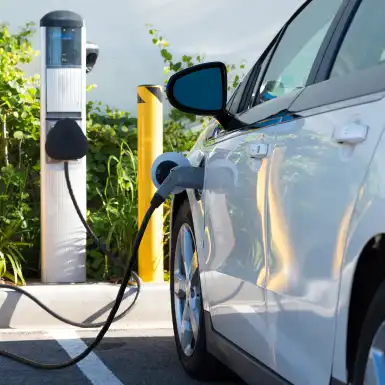
Infrastructure Upgrades: Installing Level 2 and Level 3 Chargers
Your shop’s physical infrastructure must evolve alongside the vehicles you service. You cannot effectively test a vehicle’s charging system or return a “full” car to a customer if you are relying on a standard wall outlet. Installing a mix of Level 2 and Level 3 chargers is a strategic necessity to support both your internal inventory and customer vehicles.
Level 2 chargers are perfect for overnight stays or long-term repairs, while a Level 3 DC fast charger allows for quick diagnostic checks of the vehicle’s high-speed charging capabilities. This infrastructure does more than just power the cars; it signals to the community that your facility is “EV-ready,” making your shop a destination for the growing demographic of electric car owners.
Modernizing the Multi-Point Inspection
The traditional “oil and filter” checklist is becoming obsolete. To capture the full scope of an EV’s condition, you must revise multi-point inspection forms to include EV-specific health checks. The most critical addition is the battery state-of-health (SOH) report.
Just as a customer wants to know how much life is left in their brake pads, an EV owner wants to know the degradation level of their battery. Your new inspection process should also cover high-voltage cable integrity, the condition of the charging port, and a deep dive into the thermal management fluid levels. Providing a digital, data-driven report of these systems adds a level of professionalism that justifies the transition away from low-margin oil services.
Pivoting Revenue Streams for the Electric Era
It is no secret that the “oil and filter” revenue stream is drying up. However, the fear that EVs will kill the repair industry is unfounded; the revenue is simply shifting. To stay profitable, shops must emphasize cabin air quality, suspension components, and specialized braking systems.
While regenerative braking reduces the wear on brake pads, it also means that mechanical calipers are used less frequently, making them prone to seizing in salt-heavy environments. This opens the door for “brake cleaning and lubrication” services that were rarely a priority for ICE vehicles. By focusing on these new niches, you can maintain high bay productivity even as the roar of the engine fades into a hum.
Adapting for the Future of Automotive Service
The transition to electric vehicle maintenance represents a fundamental shift in the automotive repair industry, moving from mechanical-heavy workflows to high-voltage electronics and thermal management. By investing in the right safety equipment and infrastructure—specifically insulated tools and Level 3 chargers—shops can protect their technicians while positioning themselves as leaders in a growing market. While traditional revenue from oil changes will decline, it is being replaced by sophisticated battery diagnostics, specialized tire care, and complex cooling system maintenance. Successful shops will be those that embrace this evolution by updating their technician training roadmaps and revising their multi-point inspections to reflect the unique needs of the modern EV owner.
Disclaimer: This article provides general industry insights and is for informational purposes only. It should not be construed as specific financial advice, accounting guidance, or a substitute for consulting with a qualified CPA or business advisor regarding your dealership’s unique financial situation.
Questions?
With over 45 years of experience in automotive, RV, and marine fixed operations, Brett Coker, CMC, has held nearly every position in a dealership, including Service Advisor, Service Manager, F&I Manager, and General Manager for import and domestic franchises. Widely known as a fixed operations expert, Brett consults with Brady Ware Dealership Advisors and emphasizes a strong focus on maximizing revenue per billed hour and implementing proven processes that help dealers and their employees build profitable, sustainable service and parts departments.