
S Corp Compensation Year-End Review
S Corporation Compensation Review and Year-End Checklist
As the year draws to a close, it’s essential for S corporation owners to conduct a thorough review of their compensation. Proper compensation planning can help minimize tax liabilities and ensure compliance with IRS regulations. In this article, we’ll discuss key considerations for S corporation owners when reviewing their year-end compensation.
Understanding S Corporation Compensation
S corporations are pass-through entities, meaning the business’s profits and losses flow directly to the shareholders’ personal tax returns. This structure offers several tax advantages, including the potential to avoid double taxation. However, it’s crucial to understand how compensation is treated within S corporations.
The IRS requires that S corporation shareholders be paid a reasonable salary for their services to the business. This salary is subject to payroll taxes, including Social Security and Medicare taxes. Any profits remaining after paying reasonable compensation are considered K-1 income and are reported on the shareholders’ individual tax returns.
Factors Affecting Reasonable Compensation
Determining what constitutes “reasonable compensation” can be complex. The IRS considers various factors when evaluating the reasonableness of S corporation compensation, including:
- Time and effort dedicated to the business
- Skills and abilities required to perform the job
- Responsibilities and authority within the company
- Comparable compensation for similar positions in comparable businesses
- The company’s overall profitability
It’s important to document the factors supporting the reasonableness of your compensation. This documentation can be helpful in the event of an IRS audit.
“Understanding the tax rules surrounding S corporation compensation is crucial for staying compliant and avoiding potential penalties.”
Avoiding Undercompensation
Undercompensating S corporation shareholders can lead to significant tax consequences. If the IRS determines that your compensation is unreasonably low, it may reclassify a portion of your K-1 income as wages. This can result in additional payroll taxes, including employment taxes and self-employment taxes.
Avoiding Overcompensation
On the other hand, overcompensating shareholders can also be problematic. Excessive compensation may be treated as a distribution rather than wages. This can limit the potential for deducting business expenses related to the compensation. Additionally, excessive compensation can trigger penalties for unreasonable compensation.
Year-End Review Checklist
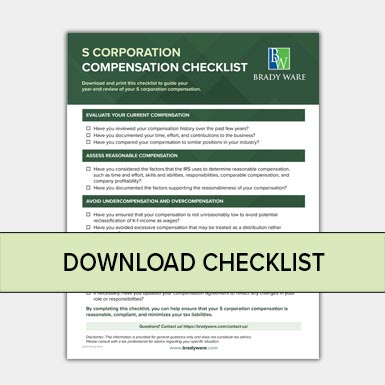
To ensure compliance with IRS regulations and minimize tax liabilities, consider the following checklist when reviewing your S corporation compensation:
- Review your compensation history: Compare your current compensation to prior years to identify any significant changes.
- Evaluate your contributions to the business: Document your time, effort, and contributions to the company’s success.
- Research comparable compensation: Gather information on compensation for similar positions in your industry.
- Consider consulting a tax professional: A qualified tax advisor can help you determine reasonable compensation and minimize your tax burden.
- Update your compensation agreement: If necessary, revise your compensation agreement to reflect any changes in your role or responsibilities.
By conducting a thorough review of your S corporation compensation and following these guidelines, you can help ensure that you stay on the right side of the IRS and minimize your tax liabilities.
Questions?
Adam manages a variety of tax and accounting engagements for business clients in numerous industries, including manufacturing, real estate, construction, alternative investments, and professional services. He has experience in federal tax, multi-state corporate income and franchise tax, and municipal income tax. In addition to his tax compliance background, Adam specializes in preparing and managing complex partnership engagements.