
Nailing Nonprofit Records Retention
Records Retention: A Vital Component of Nonprofit Governance
Effective records retention is a critical aspect of nonprofit governance. It ensures accountability, transparency, and compliance with legal and regulatory requirements. By maintaining accurate and organized records, nonprofits can protect themselves from legal disputes, demonstrate good stewardship of resources, and support decision-making.
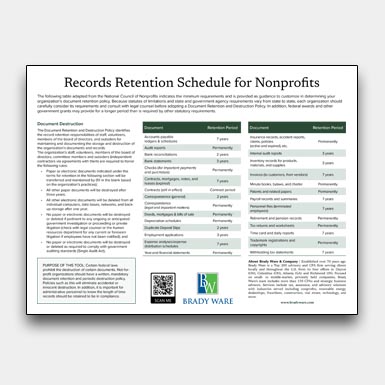
Why is Records Retention Important for Nonprofits?
Nonprofits are subject to various federal, state, and local laws that govern recordkeeping. Failure to comply with these laws can result in fines, penalties, and even legal action. Accurate and complete records provide evidence of the nonprofit’s activities, decisions, and financial transactions, ensuring accountability and transparency. Well-maintained records can also be used to support decision-making, identify trends, and evaluate the effectiveness of programs and initiatives. Proper records retention can help to mitigate risks associated with legal disputes, audits, and investigations.
Best Practices for Records Retention
To ensure effective records retention, nonprofits should:
Develop a Retention Policy
A written retention policy outlines the types of records to be retained, the retention periods for each type, and the disposition procedures for records that have reached the end of their retention period.
Identify Relevant Laws and Regulations
Research and understand the specific laws and regulations that apply to your nonprofit’s activities. This may include federal laws like the Sarbanes-Oxley Act, state laws governing charitable organizations, and industry-specific regulations.
Classify Records
Categorize records based on their content and importance. This will help you determine appropriate retention periods and storage methods.
Establish a Consistent System
Implement a consistent system for creating, storing, and retrieving records. This may involve using electronic document management systems or physical filing systems.
“Effective records retention is not just a legal requirement; it’s a cornerstone of good governance.”
Ensure Proper Labeling and Storage
Clearly label all records with identifying information, such as date, creator, and subject matter. Store records in a secure and organized manner to prevent loss or damage.
Implement a Regular Review Process
Conduct regular reviews of your records retention policy to ensure it remains current and effective. Update the policy as needed to reflect changes in laws, regulations, or organizational practices.
Consider Electronic Records
If your nonprofit primarily uses electronic records, implement appropriate security measures to protect them from unauthorized access, alteration, or destruction.
Destroy Records Properly
When records reach the end of their retention period, destroy them in a secure and compliant manner. This may involve shredding, pulping, or electronic destruction.
Common Types of Records to Retain
- Financial Records: Bank statements, invoices, receipts, financial reports, and tax returns
- Grant Records: Grant agreements, progress reports, financial reports, and correspondence
- Personnel Records: Employee files, payroll records, benefits information, and performance evaluations
- Legal Records: Contracts, leases, legal correspondence, and court documents
- Board of Directors Records: Meeting minutes, resolutions, and correspondence
- Program Records: Program plans, evaluations, and reports
- Fundraising Records: Donor information, pledge forms, and fundraising event materials
By following these best practices, nonprofits can ensure that their records are properly managed, protected, and readily accessible when needed. Effective records retention is a fundamental aspect of good governance and can help to protect the organization’s reputation, financial stability, and mission.
Brady Ware Nonprofit Advisors want to help you fulfill your mission with financial health and compliance services and a network of nonprofit consultants who specialize in strategic decision-making.
Questions?
Dylan manages a variety of accounting and auditing engagements for the firm’s Dayton, Ohio, clients in numerous industries, including construction, manufacturing, and technology. He has an extensive background in auditing nonprofit organizations, including those that are recipients of federal funding, as well as experience in auditing employee benefit plans.