
Why do Nonprofits Need Organizational Assessments?
How does your nonprofit know it's doing what it's doing?
By Libby V, Nonprofit Consultant
Assessments are critical to the growth and performance of any organization. Because nonprofits can be understaffed and overworked while trying to fulfill their missions, assessments frequently fall down the list of priorities. If you’re not using data to make decisions, you don’t have all the information you need to identify and implement productive solutions.
It’s important to always be learning and improving what you’re doing; without good data, you can’t do that. The term “data” often brings to mind formal evaluations and technical processes which are often expensive and take months or even up to a year to complete – but it really boils down to assessing what you’re doing and whether or not you’re achieving the results you want. It doesn’t have to be complicated. I like to break down organizational assessments into 6 areas:
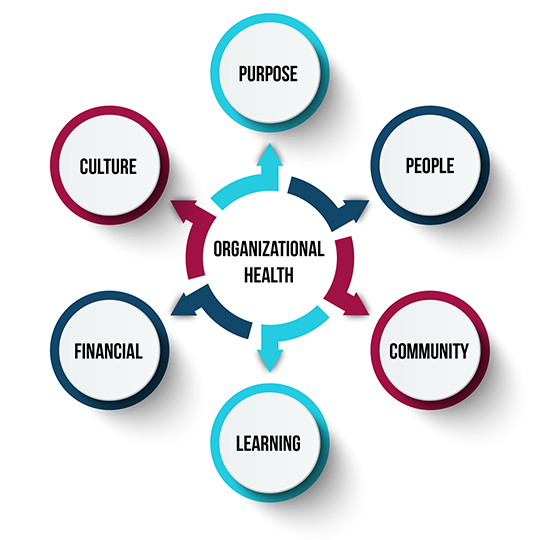
1. Purpose
2. People
3. Community
4. Learning
5. Financial
6. Culture
Purpose Assessment
Everything your nonprofit does should come back to “Is this helping us fulfill our purpose?” It is important to make sure that the purpose of the organization stays at the center of everything the organization does and is the focus of every effort of every person involved in the organization. An organization should never exist only to perpetuate itself.
People Assessment
People are an organization’s most valuable asset. The decisions they make, the time they commit, the services they provide, the processes they produce, and the relationships they build are the lifeblood of the organization. A committed, motivated employee or volunteer can make the difference between achieving your mission and having positive impacts on clients and the communities or not. Dedicated, engaged board members can set the tone and influence the culture of an organization. Taking care of the needs of the people who work at and with your nonprofit, and making your organization their job of choice, is imperative and a worthwhile investment.
Ecosystem / Community Assessment
Extending your organizational culture and environment beyond the internal staff and employees out to your clients and the broader communities will make your organization stronger and in sync with the communities you serve and will support you in broadening the impacts of your work. The first step is to make sure you know the makeup, values, needs, and culture of the communities you interact with and those that surround your organization’s office(s).
Once you understand the communities, you need to assess how you are engaging with those communities. And you may need to spend time and effort meeting members of those communities and understanding how they’d like to be engaged.
Being clear about your budget, monitoring it regularly, and assuring that everyone in the organization is a proactive partner in the financial health of the organization is essential.
Learning Assessment
A learning organization actively creates, captures, transfers, and mobilizes knowledge to enable it to adapt to a changing environment. A learning organization facilitates the learning of its members and continuously transforms to meet current circumstances and/or position themselves to be prepared for anticipated trends. To be a learning organization, one has to have a clearly defined direction and destination, then check in at regular intervals to assure you are on course – and when you are not – make the appropriate corrections.
Financial Assessment
It will be impossible to stay in business and achieve your mission if your organization is not financially stable. Being clear about your budget, monitoring it regularly, and assuring that everyone in the organization is a proactive partner in the financial health of the organization is essential. Financial Assessments are probably the most commonly and universally implemented assessment completed by nonprofits. However, many do not go beyond the standard financial audit. Nonprofit leaders should dig in to understand how financial health plays out across all departments, programs, and activities of the organization.
Work Culture and Environment Assessment
The workplace culture and environment of your organization are what make your organization unique. They are the sum of its values, beliefs, behaviors, communications, and processes. Positive workplace culture and environment attract talented employees, drive engagement, impact job satisfaction, and affect staff performance. The personality of your organization is influenced by everything and impacts everything.
Start Small
If you feel overwhelmed at the idea of assessing your organization, begin with small steps and ask questions such as:
Why do we really exist?
What’s our purpose and are we living up to it?
What are the results we’re trying to achieve?
In time, using assessments to help you determine where you are on the path to organizational health will yield critical information to help your organization make data-driven decisions and improve operations—all of which help your organization to better fulfill its mission.
Brady Ware Nonprofit Advisors want to help you fulfill your mission with financial health and compliance services and a network of nonprofit consultants who specialize in strategic decision-making.

Libby Villavicencio
Nonprofit Champion
Libby V & Associates
About the Author
Libby V knows strong communities and great organizations don’t happen by chance. They have strong leadership in place, a definition of the impact they want to have, a clear path for achieving their impact and the right people on the bus and in the right seats.
She helps communities and organizations line up everything they need to achieve stronger results than ever before. She is nationally respected for her work with communities, government, higher education, nonprofit and philanthropic organizations.
With many years of leadership experience, Libby fully understands communities, government, higher education, nonprofit and philanthropic sectors. She is also experienced in public-private partnerships through consulting roles with initiatives in Atlanta, Baton Rouge, New Jersey, Raleigh-Durham, Massachusetts, Chicago, California, Seattle, and Ohio.