
Effective Strategic Planning with PESTELC Analysis
Effective Strategic Planning with PESTELC Analysis
By Bob Reynolds, CPA, CGMA
Most of us would agree, change is the only constant in the world today, and if we expect to remain viable and relevant in the future, we must embrace change. As organization leaders, we must understand what and why is our environment changing and how these changes will impact our organization if we are to “embrace change.”
Strategic planning identifies those initiatives and actions that will enable an organization to advance its mission and the impact on those it serves. If successful, an organization’s strategic plan will develop measurable goals, prioritize actions to accomplish those goals, establish priorities for implementation, the process for monitoring results on an ongoing basis, and a process to adjust when its environment changes.
Traditional SWOT Analysis
Many nonprofits start the strategic planning process by assessing the organization’s strengths, weaknesses, opportunities, and threats, by performing a traditional “SWOT” analysis. Looking at external factors (opportunities, threats) as well as internal factors (strengths, weakness) is important in developing an organization’s strategic plan. Sadly, this analysis is often based in part on perceptions about the external environment and a lack of objectivity about the organization’s strengths and weaknesses.
To enhance the traditional SWOT analysis, we suggest an organization first perform a detailed assessment of the organization’s external operating environment by performing a PESTELC analysis. This analysis examines the external Political, Economic, Social, Technological, Environmental, Legal, and Competitive factors that impact the organization and is a very useful tool to help planning participants develop a common understanding of the world in which the organization exists.
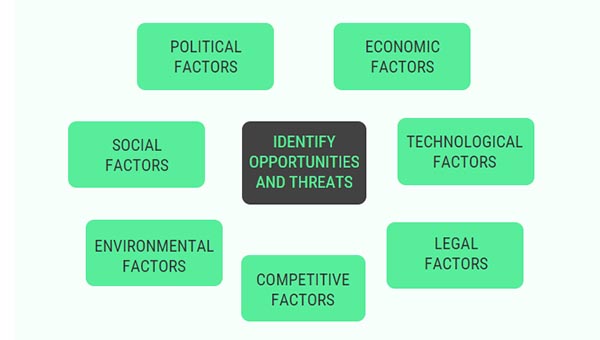
PESTELC Analysis
The PESTELC analysis identifies the following:
Political factors relate to factors driven by governmental actions and policies. For example, legislation that reduces or eliminates government funding for certain programs or types of organizations.
Economic factors relate to the broader economy. For example, rising interest rates, inflation, supply chain constraints.
Social factors are more difficult to assess. These relate to shifts or changes in stakeholder behavior, societal views, and lifestyle. For example, demographic shifts, charitable giving behavior, shift in how individuals respond to social issues, shift to remote or hybrid working arrangements.
Technological factors relate quite simply to changes in the use of technology in our personal and working lives. For example, whether to use severs or cloud-based data storage, use of social media in fundraising and communication activities, and automation of processes.
Environmental factors relate to consideration of the organization’s physical environment. For example, the organization’s carbon footprint, the impact of global warming, and limitation on the availability or use of natural resources.
Legal factors relate to changes in the regulatory environment like regulation of programs or services funded by government entities, privacy laws, regulation of employment practices.
Competitive factors involve an assessment of whether there are other organizations providing the same programs and services and how this impacts the availability of resources to an organization or identifying opportunities to collaborate with others to share resources.
With the information gathered in the PESTELC analysis an organization will gain a deeper understanding of the potential threats and opportunities present in its operating environment. The key is to identify those strengths that can leveraged to capitalize on opportunities and address those weaknesses necessary to mitigate threats.
Brady Ware Nonprofit Advisors want to help you fulfill your mission with financial health and compliance services and a network of nonprofit consultants who specialize in strategic decision-making.