
Culture Due Diligence: The Missing Piece in M&A
Culture is Hard to Measure, but You Shouldn’t Acquire a Company Without Understanding It
 I spent some time with a new friend at a conference last week. His company had been acquired by a European company and he was president of their new subsidiary. “How has it gone after the M&A?” I asked. His response was long and winding (wine may have made an impact) but the bottom line is that culture was eating him alive.
“All the Europeans want to do is say no and they love their PowerPoints,” he complained. “They want 60-page decks, and you may not even get into what you want to talk about until slide 30. It seems my job as president is to make PowerPoint decks. Even then, they seem to have all the answers.”
Which brings me to this chart by Steven Jeffes. If this data is right (and I’ll bet it is), M&A succeeds or fails based on culture compatibility between the target and acquirer. This may be confirmation bias, but I absolutely believe it. We are currently seeking acquisitions, and culture for us is non-negotiable.
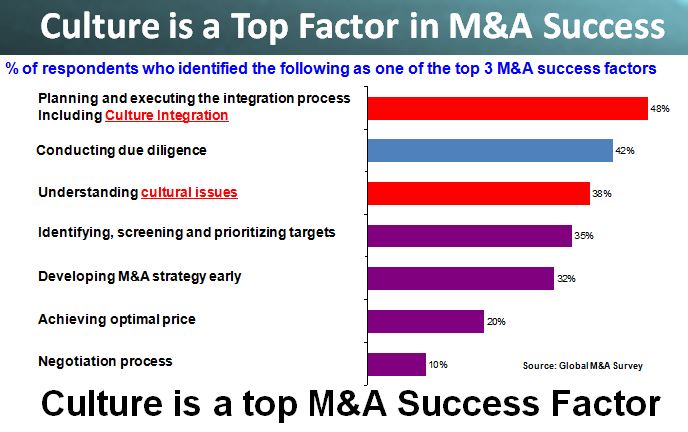
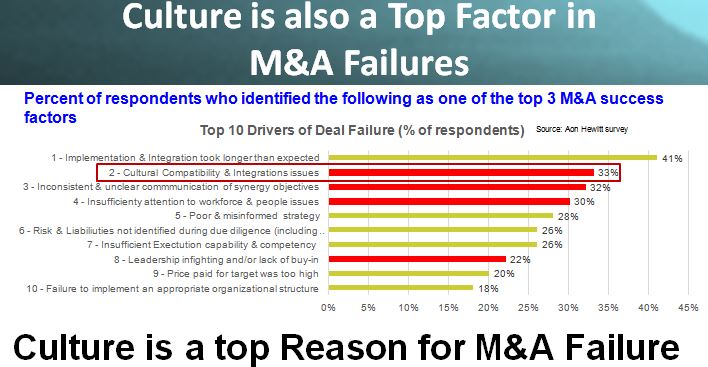
Many of us know that most M&A deals fail to achieve the desired results. This should be surprising to us. Companies spend TONS of money checking out deals. They hire consultants (like us!). They snap on the ol’ rubber glove and perform the deep exams that we call “due diligence.”
But most of that due diligence is financial, legal, and market. It’s important and useful. You need to know if the company’s earnings are sustainable. You need to know if the company is a lawsuit waiting to happen. But how much time is spent on culture? Probably almost zero in most cases. Too many times, I’ve heard acquirers say, “Either they’ll get with the program, or they’ll be out of a job.” Except, if you fire everybody, you don’t have a company anymore. People aren’t typically at their best when they are working under duress (they are probably too distracted looking for another job).
Culture due diligence is hard. There are readily identifiable experts for financial, market and legal due diligence. But who is the culture due diligence expert? How do you measure culture? Is there a company culture scale?
Add to that a very practical barrier to cultural due diligence – sellers don’t want acquirers talking to their people. On some level, this makes sense. People get spooked when they think their company is up for sale and might quit. Others may demand stay bonuses. So, sellers make very reasonable demands that their people are effectively off-limits.
Except this leaves a MAJOR blind spot in due diligence. You’ve got to figure out culture or you’re taking a big, open-ended risk that you can’t even begin to plan for. If you can’t do this, you’re not ready to acquire or the target isn’t ready to be acquired.
Will someone else swoop in and make the acquisition that you walked away from? Possibly. Is it the worst thing in the world to let a competitor make a bad deal? Talent may become available. Customers will become more open to switching to you. Management will be distracted trying to tame the cobra in the bedroom while you can prosecute your strategy. It’s OK to let your competitors hurt themselves with dumb decisions.
Questions?
Brady Ware offers a comprehensive range of advisory services, including strategic advisory, financial analysis, tax compliance, litigation support, employee stock ownership plans, succession planning, mergers and acquisitions, quality of earnings analysis, tax structuring, and business valuations. Our team of experienced professionals provides tailored solutions to help clients achieve their financial goals, minimize risks, and optimize their business performance. Brady Ware’s advisory services focus on developing solutions and creating pathways to success for businesses facing complex challenges, leveraging their deep understanding of business operations, transactional situations, and personal and ownership legacies.