
Choosing the Right Business Entity
Business Entity Selection: Understanding Key Factors for Your Success
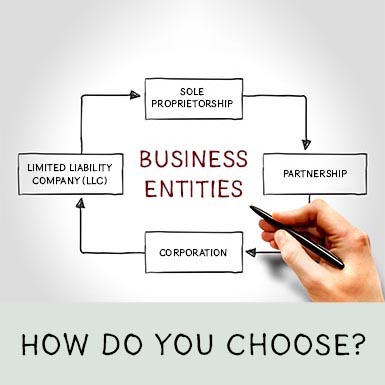
Choosing the right business entity is crucial. Factors like liability protection, tax implications, funding needs, and control all play a significant role. Sole proprietorships offer simplicity but limited liability. Partnerships share profits and losses but carry high personal liability. LLCs and corporations provide stronger liability protection but may have more complex administrative requirements. Understanding these factors will help you make an informed decision about the best structure for your business.
Liability Protection
Question to ask: How much personal risk are you willing to assume?
The level of personal risk you’re willing to assume is paramount. Sole proprietorships and general partnerships offer limited liability protection, exposing your personal assets to business debts. In contrast, entities like Limited Liability Companies (LLCs), S Corporations, and C Corporations provide a shield, protecting your personal assets from business liabilities.
Tax Considerations
Question to ask: How will your business be taxed?
Tax implications vary significantly between entities. Sole proprietorships, partnerships, and default LLCs are typically pass-through entities, meaning business profits and losses flow through to the owners’ personal tax returns. C Corporations, on the other hand, are subject to double taxation – corporate income tax and then taxes on dividends paid to shareholders.
Funding and Growth
Question to ask: How will you raise capital?
Your funding strategy and growth aspirations will influence your entity choice. Corporations, particularly C Corporations, are generally better suited for raising capital through stock offerings and attracting investors. The chosen entity structure can significantly impact your ability to expand and scale the business.
“Selecting the right business entity is a critical decision that can significantly impact your business’s long-term success.”
Administrative Requirements
Question to ask: How much paperwork and administrative burden are you willing to handle?
The administrative burden associated with each entity type varies considerably. Sole proprietorships are the simplest to form and maintain, while corporations often involve more complex paperwork and regulatory compliance.
Number of Owners
Question to ask: How many individuals will own and operate the business?
The number of business owners will directly influence your entity selection. Sole proprietorships are suitable for single-owner businesses, while partnerships are designed for businesses with multiple owners. LLCs and corporations can accommodate a wide range of ownership structures.
Control
Question to ask: How much control do you want to retain?
The level of control you wish to retain over your business is another crucial factor. Sole proprietorships offer maximum control to the owner. Partnerships involve shared control among partners. Corporations typically have more formal management structures, which may limit the owner’s direct control.
Choosing the Right Business Entity
Choosing the right business entity is a complex decision with significant long-term implications. Careful consideration of all factors, including liability protection, tax consequences, funding needs, administrative requirements, ownership structure, and desired level of control, is essential. Consulting with legal and financial professionals can provide valuable guidance and ensure you make an informed decision that aligns with your business goals and objectives.
Disclaimer: This article provides general information and should not be considered professional financial or tax advice. Please consult with a qualified CPA or financial advisor for guidance specific to your individual business needs.
Questions?
Eric Carter focuses on developing and implementing financial and tax planning strategies for his clients. He spends most of his time in consulting work, helping clients with compliance, buying and selling business, and other transactional needs. Eric also helps lead the firm’s business advisory services, providing customized tax services and consulting for small-market business clients.