
Does Your Board Truly Understand Your Nonprofit’s Financials?
Empowering Your Nonprofit's Informed Decision-Making Through Financial Transparency
Many nonprofit organizations struggle with ensuring their board members fully comprehend the financial information presented to them. Financial literacy isn’t always a given, and board members come from diverse backgrounds. This can create a communication gap that hinders effective decision-making.
Understanding Your Audience is Key
The first step is acknowledging the varying financial knowledge levels on your board. Don’t assume everyone understands technical terms. “Board-designated net assets,” for instance, can be explained as “funds set aside for specific purposes, like building a new facility.”
Financial training workshops led by accountants, investment advisors, or even board members with financial expertise can be immensely helpful to nonprofits.
Financial Health Through Cash Flow Analysis
Consider incorporating a cash flow analysis, a simple spreadsheet outlining current cash flow, anticipated inflows, and outflows for the coming month. This empowers your nonprofit’s board to make informed short-term decisions, such as applying for a line of credit.
Charts for Clear Communication
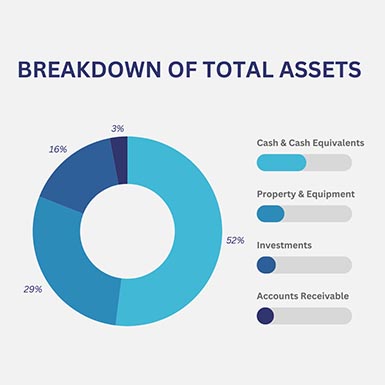
Financial statements, like the statement of financial position, can overwhelm with numbers. A chart can provide a clear snapshot of your assets. This allows board members to quickly grasp the composition of your assets, like the percentage of cash compared to investments.
Similarly, charts can visualize funding sources for events, aiding in future event planning.
Bar Charts for Tracking Change
The statement of activities details revenue, expenses, and the resulting change in net assets. Presenting this information in a bar chart allows for easy comparison with previous periods. Regularly updated bar graphs help track progress towards budget goals.
Financial Ratios: Tracking Expectations
Many organizations have reduced expenses due to economic downturns. Financial ratios, like “management and general costs to total support and revenue,” allow your board to assess cost-cutting effectiveness at a glance. These ratios help ensure costs and revenues align with your nonprofit organization’s goals.
For example, a 1:10 ratio of management and general costs to total support and revenue indicates that only 10% of earned funds go towards administrative costs.
Transparency Breeds Trust
Donors and stakeholders increasingly expect financial responsibility from non-profits. Equipping your nonprofit’s board with financial literacy fosters good governance and informed decision-making.
Check out the Council of Nonprofit’s Financial Literacy for Nonprofit Boards for additional information.
Brady Ware Nonprofit Advisors want to help you fulfill your mission with financial health and compliance services and a network of nonprofit consultants who specialize in strategic decision-making.
Questions?
Chelsea’s background in audit and assurance enables her to provide specialized accounting services to nonprofit organizations.