
The Art of Succession Planning
A Roadmap for a Smooth Succession Transition
Succession planning, the process of preparing for a change in leadership within a business, is crucial for ensuring its long-term viability and stability. For many individuals, especially those who own family businesses, this transition can be complex and emotionally charged. A tax advisor can play a pivotal role in guiding individuals through this process, providing expert advice on financial, legal, and tax-related matters.
Understanding Your Succession Planning Goals
The first step in succession planning is to clearly define your goals. What do you hope to achieve through this transition? Are you looking to retire, transfer ownership to family members, or sell the business? Your tax advisor can help you identify your priorities and develop a plan that aligns with your objectives.
Assessing Your Financial Situation
A comprehensive financial analysis is essential for effective succession planning. Your tax advisor can help you evaluate your current financial situation, including your assets, liabilities, and income. This information will be used to determine the best approach for transferring ownership or winding down the business.
Tax Implications
Succession planning can have significant tax implications. Your tax advisor can help you understand the potential tax consequences of different options, such as gifting, selling, or transferring ownership to a trust. They can also recommend strategies to minimize your tax liability and maximize your financial returns.
“A tax advisor can play a pivotal role in guiding individuals through the succession process, providing expert advice on financial, legal, and tax-related matters.”
Estate Planning
Succession planning often intersects with estate planning. Your tax advisor can help you develop an estate plan that complements your succession goals. This may involve creating trusts, naming beneficiaries, and addressing other estate planning concerns.
Business Valuation
Determining the value of your business is a critical step in succession planning. Your tax advisor can help you obtain a professional valuation that accurately reflects the fair market value of your company. This information will be essential for negotiating the sale of the business or transferring ownership.
Legal Considerations
Succession planning involves legal aspects such as drafting buy-sell agreements, creating family limited partnerships, and establishing trusts. Your tax advisor can work with attorneys to ensure that these legal documents are properly executed and align with your overall plan.
Family Dynamics
Succession planning can be particularly challenging for family-owned businesses, as family dynamics can often complicate the process. Your tax advisor can help you navigate these complexities and ensure that the transition is fair and equitable for all family members involved.
Ongoing Support
Succession planning is an ongoing process. Your tax advisor can provide ongoing support and guidance as your circumstances change. They can help you monitor your financial situation, review your estate plan, and make adjustments as needed.
By working closely with a tax advisor, individuals can develop a comprehensive and effective succession plan that protects their financial future and ensures the long-term success of their business.
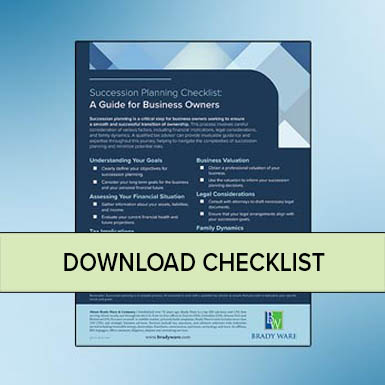
Download our Succession Planning Checklist
A succession planning checklist can help ensure a smooth and stress-free transition. Get expert tips on financial planning, legal considerations, and tax implications.
Questions?
Estate, Trust, and Succession Planning Services
Mark’s background in tax enables him to provide extensive services to the firm’s clients in the areas of estate and retirement planning, and business succession consulting.