
Tax Relief for Hurricane-Affected Families and Businesses
Tax Relief After Hurricanes Helene and Milton: Understanding Casualty Loss Deductions
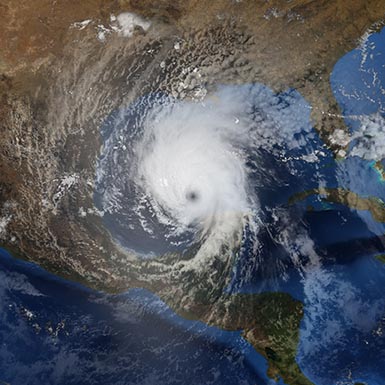
Hurricane Milton inflicted widespread devastation across many regions of Florida, just weeks after Hurricane Helene impacted millions in several southeastern states. These two destructive storms are among numerous weather-related disasters this year, adding to the toll of hurricanes, tornadoes, wildfires, and other severe events. The significant losses from these catastrophes have affected many taxpayers across the country.
If your family or business has been impacted by such disasters, you might be eligible for a casualty loss deduction and federal tax relief.
What Qualifies for a Casualty Loss Deduction?
A casualty loss occurs when property is damaged, destroyed, or lost due to a sudden, unexpected, or unusual event. These events include floods, hurricanes, tornadoes, fires, earthquakes, and volcanic eruptions. However, normal wear and tear or gradual deterioration of property does not qualify as a deductible casualty loss—droughts, for example, typically do not qualify.
Eligibility for a casualty loss deduction varies based on whether the property is used personally or for business. You can generally deduct losses related to your home, personal vehicles, and household items if the damage was caused by a federally declared disaster. By law, such a disaster is defined as one where the U.S. president declares the area eligible for federal assistance.
For business or income-producing property, such as rental properties, casualty losses can be deducted regardless of whether the area has been declared a disaster zone.
Typically, casualty losses are deducted in the year they occur, usually the same year as the disaster. However, if the loss results from a federally declared disaster, you can choose to apply the loss to the previous year, potentially receiving a faster refund by amending the earlier tax return rather than waiting until you file for the year of the disaster.
Insurance and Reimbursements
If your loss is covered by insurance, you must reduce the amount of your deductible loss by any insurance reimbursement or expected reimbursement. Additionally, any salvage value must also reduce the loss amount.
Reimbursement may also lead to capital gains tax liability. If the amount of your insurance payout or other reimbursements (minus expenses like appraisal costs) exceeds the original cost or adjusted basis of the property, it may result in a capital gain. This gain must be reported as income unless you qualify to defer it.
Deferral may be possible if you replace the destroyed property with similar property within a specified time frame. This also applies if you acquire at least 80% ownership in a corporation holding similar property or if you use the reimbursement funds to restore the damaged property.
You can also offset casualty gains with casualty losses that were not the result of a federally declared disaster. This is the only way you can deduct losses on personal-use property from non-declared disaster areas.
“Significant losses from Hurricanes Helene and Milton can be offset with a casualty loss deduction on your federal taxes. Find out if you qualify and how to claim this valuable tax relief.”
Calculating Casualty Loss
For personal-use property or partially damaged business-use or income-generating property, your deductible casualty loss is the lesser of:
- The adjusted basis of the property before the disaster (generally, what you paid for it, including improvements minus depreciation), or
- The decrease in fair market value (FMV) of the property due to the disaster (the difference between its FMV before and after the event).
For business-use or income-producing property that is completely destroyed, the deductible loss is the adjusted basis minus salvage value and any insurance or reimbursements received.
If one casualty event affects multiple pieces of property, you must calculate the loss for each property individually and then add them together to determine the total casualty loss.
An exception applies to personal-use real estate, such as your home, where the entire property, including improvements like landscaping, is treated as one item. The loss is calculated as the smaller of the drop in the property’s FMV or its adjusted basis.
Additional limitations may also affect the amount of loss you can deduct. For personal-use property, each loss must be reduced by $100 after factoring in salvage value and reimbursement.
If you experience multiple casualty losses in a single year, you must apply the $100 reduction separately to each loss and report each one on a separate IRS form. When multiple taxpayers incur losses from the same event, the $100 reduction applies individually to each.
Furthermore, for personal-use property, you must reduce your total casualty losses by 10% of your adjusted gross income after applying the $100 rule. As a result, smaller losses on personal-use property often yield little to no tax benefit.
Documenting Your Losses
Proper documentation is essential to claim a casualty loss deduction. You will need:
- That you were the owner of the property or, if you leased it, that you were contractually liable to the owner for the damage,
- The type of casualty and when it occurred,
- That the loss was a direct result of the casualty, and
- Whether a claim for reimbursement with a reasonable expectation of recovery exists.
Additionally, you’ll need to document the property’s adjusted basis, any reimbursements received, and the FMV of the property both before and after the casualty event.
Qualifying for IRS Tax Relief
This year, the IRS has provided tax relief to individuals and businesses affected by various natural disasters, including:
- Hurricane Helene, which impacted Alabama, Georgia, North Carolina, South Carolina, and parts of Florida, Tennessee, and Virginia.
- Hurricane Milton, which is likely to receive tax relief as well. You can keep track of designated disaster areas and relief announcements on the IRS website.
Taxpayers Outside Disaster Zones
Even if you don’t live in a federally declared disaster area, you may still be considered an affected taxpayer if essential records necessary for meeting tax filing or payment deadlines are located in a covered disaster area.
Have Questions?
If you’ve suffered casualty losses due to a natural disaster, reach out for assistance. Tax laws and compliance can be complex, and our tax advisors can help guide you through the process.
Questions?
Adam manages a variety of tax and accounting engagements for business clients in numerous industries, including manufacturing, real estate, construction, alternative investments, and professional services. He has experience in federal tax, multi-state corporate income and franchise tax, and municipal income tax. In addition to his tax compliance background, Adam specializes in preparing and managing complex partnership engagements.