
Take Five Fall 2025: How to Ask for Major Gifts with Confidence
Part 1: Why Your Inner Work Is the Key to Confident and Successful Nonprofit Fundraising
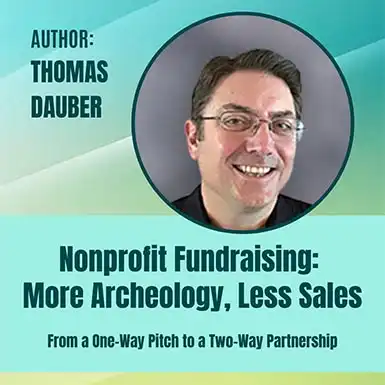
By Thomas Dauber, Fundraising Professional
Tom Dauber is Brady Ware’s Take Five Fall 2025 keynote speaker with his topic: Major Gift Fundraising with Confidence. His work in nonprofit fundraising is more crucial than ever as many organizations face a “funding cliff” due to significant cuts in federal and state grants. Rather than succumbing to the fear and scarcity mindset that comes from relying on government funding, Dauber challenges leaders to shift their focus to building a resilient fundraising model based on individual and major gifts. His approach centers on the idea that donors are inspired by a bold vision and a clear mission, not by a funding deficit. By focusing on the foundational, internal work of why they do what they do, nonprofit leaders can overcome the psychological barriers to asking for money and unlock the generosity of donors to secure the future of their organizations.
Register today for the Fall 2025 Take Five Nonprofit Conference!
Fundraising professionals can overcome the psychological and emotional barriers to asking for major gifts by first doing the work to connect with their personal “why.” This foundational work helps leaders move past fears of rejection and the “mental blocks” that prevent them from asking with confidence. When you understand your own motivation, it becomes a natural and authentic extension to communicate the organization’s mission and vision, which inspires donors to support a positive, solutions-oriented future.
Q: What is the single biggest misconception nonprofit leaders have about major gift fundraising, and how does this mental block hold them back from asking with confidence?
Answer: There isn’t a single misconception that everyone shares, but rather a host of them, all rooted in our personal and cultural backgrounds. These internal, psychological states are what we bring into the fundraising conversation, and they can be the most difficult things to overcome. For some, asking for money feels like a personal ask, which makes it harder to do. This mental block can hold you back because you may associate a donor’s rejection with a personal rejection of you as a person. That’s why it’s so important to do the internal work and become self-aware of what fears and worries you hold about asking.
Some leaders are so focused on just closing a funding gap that they don’t take the time to think about the bigger vision. A funding gap isn’t inspiring. A lack of inspiration keeps you from making the ask, and it leaves a lot of money on the table.
Q: How can a nonprofit leader connect their own “why” to the organization’s mission in a way that builds authentic relationships with potential major donors?
Answer: This is a great question because it’s a solution to the mental blocks that hold people back from asking. One of the best ways to overcome your fears is to connect with your personal “why.” Why are you doing this work? Why does it matter? When you center yourself in your purpose, it helps you overcome those insecurities and fears. This also helps you build authentic relationships with donors because you can talk about what you’re passionate about.
Donors want to know that you’re a real person, not just someone brought on to raise money. For nonprofit presidents and CEOs, it’s especially important to be able to talk about why this work matters. When you can articulate your personal why, it’s a natural bridge to ask your potential donor about their passions and why they care about the work. That’s probably the most important conversation you can have with a donor.
“If you can couch your role in gratitude, no one will get mad at you. They may even feel inspired.”
Q: Many leaders are great at communicating the need but struggle to talk about the solution. How can they shift their focus from the problem to the donor’s potential for impact?
Answer: The news cycle often focuses on the negative, which can be an easy trap to fall into in your own fundraising efforts. While it’s important to acknowledge the need, focusing on the negative is not as powerful as focusing on the positive. People don’t want to just fix a problem; they want to be a part of a solution and a bigger vision.
Shift your focus to the positive reality you want to create and paint a picture of the solutions your organization is providing. By focusing on solutions and a big, inspiring vision, you’ll close bigger gifts because big visions often require more money.
Q: What are some of the most common fears or anxieties that nonprofit leaders face when it comes to major gift conversations, and what is one tangible first step they can take to overcome them?
Answer: The biggest fear is rejection, but it can present itself in a number of ways. For example, some people are so afraid of hearing “no” that they are not transparent about their fundraising mission, which can lead to a “bait and switch” feeling. This lack of clarity ends up wasting everyone’s time.
The tangible first step you can take to overcome these fears is to be transparent and proud of your role as a fundraiser. When you introduce yourself, be direct about the fact that you raise money and are proud of it. Share why you are grateful and excited about connecting people with an issue that is important to you.
If you can couch your role in gratitude, no one will get mad at you. They may even feel inspired. This is a simple but powerful way to filter who you spend time with and start to build a relationship with a donor on a foundation of honesty and shared passion.
Q: Confidence is not just about a one-time ask. How do you define asking with confidence as a continuous practice from the very first meeting to long-term stewardship?
Answer: Asking with confidence is rooted in a few things:
- Believing that what you’re doing is so important that people will miss out if they aren’t involved.
- Understanding that not everyone is going to give, and that’s okay. When you remove your psyche from the process and don’t associate a “no” with a personal rejection, you’ll find yourself asking more often.
- Having a clear plan. This is often called “moves management” in the fundraising world. This provides a broad framework that helps you move people from being unaware of your organization to being engaged with it, and eventually, becoming a donor.
Having a plan gives you confidence and prevents you from feeling overwhelmed. With conviction and a clear plan, you will never be in a situation where you don’t know what to do next.
Transform Your Fundraising at Take Five Fall 2025 Nonprofit Conference
Ready to move beyond your fears and transform your approach to fundraising? Join us for Brady Ware’s Fall 2025 Take Five Nonprofit Leadership Conference. Our keynote speaker, Tom Dauber, will lead a powerful session on “Major Gift Fundraising with Confidence.” You’ll gain the foundational insights and practical strategies needed to overcome mental blocks, connect with your personal “why,” and build authentic relationships that inspire major gifts. This is more than a conference; it’s an opportunity to build the conviction and clarity that will empower you to secure bigger gifts and make a greater impact. Register today and take the first step toward a more confident and successful fundraising future.

Thomas Dauber
Seasoned fundraising professional
Abundant Vision Philanthropic Consulting
About the Author
Thomas Dauber is a seasoned nonprofit leader with 25 years of experience and a remarkable track record in fundraising, having directed initiatives that have secured over $120 million in the last decade alone. His expertise spans a variety of sectors, including faith-based, healthcare, and education, with notable roles leading advancement teams at prominent institutions like The Ohio State University and OhioHealth. He has personally conducted over 4,000 donor meetings and is credited with closing 167 major gifts.
In 2023, Tom launched Abundant Vision Philanthropic Consulting to extend his expertise beyond large-scale institutions. His mission is to empower leaders of small and medium-sized nonprofits by sharing the major gift fundraising strategies typically reserved for large foundations. Through his consulting work, he assists organizations like Vineyard USA and Capital University in enhancing their fundraising capabilities and growing their revenue streams, demonstrating a commitment to making sophisticated fundraising knowledge accessible to a broader range of nonprofit organizations.