
FTC Safeguards Rule – DOWNLOAD
FTC and the Safeguards Rule: An Overview
The Federal Trade Commission (FTC) Safeguards Rule is a federal regulation that requires “financial institutions” under the FTC’s jurisdiction to develop, implement, and maintain a comprehensive information security program to protect the security, confidentiality, and integrity of customer information. This rule is a key component of the Gramm-Leach-Bliley Act (GLBA) and, surprisingly, impacts a number of businesses despite its seemingly only connection to true financial institutions.
While the original rule was established in 2003, it has been significantly updated to keep pace with modern technology and the growing threat of data breaches. The most recent amendments have made the rule more prescriptive, moving beyond general guidelines to include specific, mandatory requirements.
Why are the FTC Safeguards Rules Becoming More Prominent?
First and foremost, the rule’s new data breach reporting requirements are now in effect. This is a major change from the rule’s previous version, which did not include a specific federal reporting mandate. As of May 13, 2024, covered financial institutions are required to report certain security incidents to the FTC. This new mandate is generating headlines and a great deal of discussion in the business community as companies work to understand their new obligations.
Secondly, the FTC has indicated that it intends to make these breach reports public through a dedicated database. This move toward greater transparency is intended to inform consumers about the security practices of financial institutions and incentivize companies to strengthen their cybersecurity. This public-facing aspect of the rule adds a new layer of reputational risk for businesses and has been a central point of conversation.
What are the Key components of the Safeguards Rules
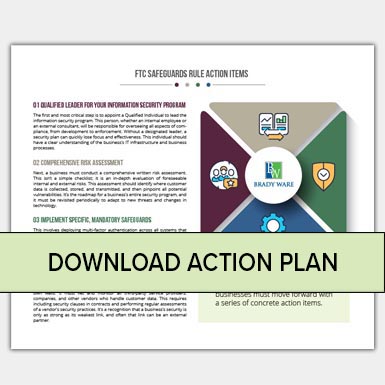
Written Information Security Program
Businesses must have a written program that outlines their plan for protecting customer data. This plan should be tailored to the company’s size, complexity, activities, and the sensitivity of the information it handles.
Designated “Qualified Individual”
A single individual must be designated to oversee and enforce the information security program. This person is responsible for the program’s development, implementation, and maintenance, and must report on its status at least annually to the company’s board of directors or equivalent governing body.
Written Risk Assessment
A foundational requirement is to conduct a written risk assessment. This must identify and assess foreseeable internal and external risks to the security of customer information. The assessment should include criteria for evaluating risks and threats, and the safeguards in place to mitigate them.
Specific Safeguards
The updated rule now requires a number of specific technical and administrative safeguards, including:
- Access Controls: Implement and periodically review controls that limit who can access customer information.
- Data Inventory and Classification: Know what customer data you have and where it is stored, transmitted, or collected.
- Encryption: Encrypt all customer information, both when it’s stored on your system (“at rest”) and when it’s being sent (“in transit”). If encryption is not feasible, an equivalent alternative must be approved by the Qualified Individual.
- Multi-Factor Authentication (MFA): Require MFA for any individual accessing customer information on your network.
- Secure Disposal: Develop procedures to securely dispose of customer information no later than two years after the last date it was used to serve the customer, unless there is a legitimate business or legal reason to keep it longer.
- Incident Response Plan: Create a written plan to respond to and recover from a security incident.
- Employee Training: Provide security awareness training for all employees and specialized training for staff who handle the security program.
Service Provider Oversight
Companies are responsible for ensuring that their third-party service providers (vendors, partners, etc.) that have access to customer data also maintain appropriate safeguards. This includes contractual requirements and periodic assessments of their security practices.
Breach Reporting
A recent amendment requires covered financial institutions to report certain data breaches and other security events to the FTC. Specifically, if a breach involves the unauthorized acquisition of unencrypted customer information of at least 500 customers, the FTC must be notified within 30 days of discovery.
Regular Testing and Monitoring
Businesses must regularly test or monitor the effectiveness of their safeguards. The rule requires either continuous monitoring of information systems or an annual penetration test and a bi-annual vulnerability assessment.
A deceiving phrase, “financial institutions,” it is important to note that the key criterion is not the size or public perception of a business, but rather whether it is “significantly engaged” in activities that are “financial in nature.” If a business handles nonpublic personal information about a customer in connection with any of these types of activities, it is likely subject to the Safeguards Rule.
Common Examples of Businesses Considered “Financial Institutions” Under the FTC Safeguards Rule:
- Lenders and Finance Companies: This is the most obvious category. It includes mortgage lenders, mortgage brokers, payday lenders, and any company that provides loans or financing to consumers.
- Automobile Dealers: Car dealerships are covered because they are frequently involved in arranging financing for vehicle purchases or leases. This activity is considered “financial in nature.”
- Retailers who issue their own credit cards: If a retail store has a private-label credit card program, it is considered a financial institution under the rule.
- Tax Preparers: Businesses that prepare consumer tax returns are included because they handle highly sensitive financial information, such as income, bank account numbers, and Social Security numbers.
- Collection Agencies: Companies that collect debts on behalf of others are considered financial institutions because they are involved in activities related to consumer financial transactions.
- Credit Counselors and Credit Repair Agencies: These businesses deal directly with consumer financial information to help manage debt or improve credit, making them subject to the rule.
- Real Estate Appraisers: Appraisers who work with consumers to value property for a mortgage or loan are covered by the rule.
- Account Servicers: Companies that manage loan accounts, mortgages, or other financial products on behalf of a financial institution.
- “Finders”: This is a newer category added in the rule’s 2021 amendments. It includes companies that bring together buyers and sellers of products or services for transactions that the parties then negotiate and consummate themselves. This can include certain online marketplaces or referral services.
- Travel Agencies: Travel agencies that operate in connection with financial services (e.g., offering credit cards or financing for trips) may be subject to the rule.
- Check-Cashing Businesses: Businesses that cash checks for consumers.
- Wire Transferors: Companies that facilitate money transfers, such as Western Union or MoneyGram.
- Educational Institutions: Colleges and universities are covered if they extend student loans or administer financial aid programs.
Why the FTC Safeguards Rule Matters Now More Than Ever
As technology evolves and the threat of data breaches grows, the FTC Safeguards Rule serves as a critical, and increasingly prominent, framework for data protection. The recent amendments underscore the FTC’s commitment to holding businesses accountable for the sensitive information they handle. Given the rule’s broad definition of “financial institutions” and the new, specific requirements—including the mandatory breach reporting and public transparency—it is essential for businesses to proactively assess their compliance. Ignoring these mandates not only exposes a company to significant legal and financial penalties but also risks damaging customer trust and reputation. Ultimately, adhering to the FTC Safeguards Rule is not just a matter of regulatory compliance; it is a fundamental part of building a resilient business in a data-driven world.
Disclaimer: This article provides general information and should not be considered professional financial or tax advice. Please consult with a qualified CPA or financial advisor for guidance specific to your individual business needs.